
Felix Massouras on Sculptured to Speak: keeping up with Philip Hardaker
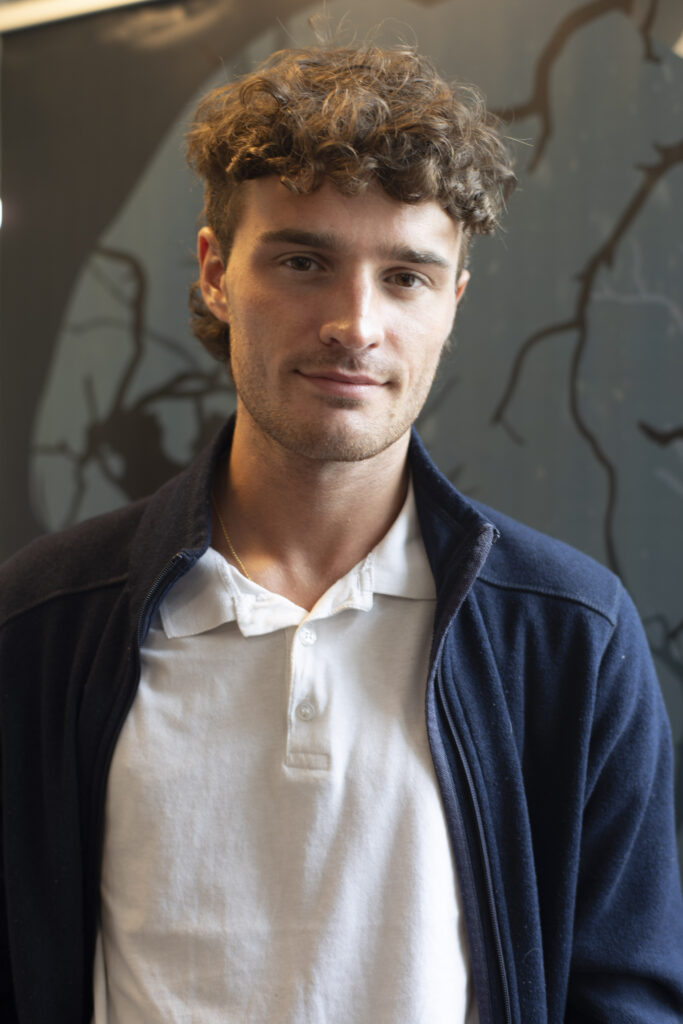
The producer of our Staffordshire Filmmaker nominee on documenting a mosaic sculptor, keeping a big story short, and the pride Stoke-on-Trent should take in its ceramics.
Philip Hardaker: Sculptured to Speak was nominated in the Staffordshire Filmmaker category at the 2026 Stafford Film Festival and screened at the Mitchell Arts Centre on 6 September. Directed and shot by Henry John Sedgley, the documentary explores the life and work of sculptor Philip Hardaker, whose mosaic sculptures carry powerful stories about global events and human struggle, and the decline of Stoke-on-Trent’s once thriving ceramic industry.
Felix Massouras, the film’s producer and interviewer, talked to festival founder and director Michael S.U. Hudson about choosing a subject, shaping a narrative and what he hopes audiences take home.
- Film
- Philip Hardaker: Sculptured to Speak
- Directed by
- Henry John Sedgley
- Produced by
- Felix Massouras
- Selection
- Nominee, Staffordshire Filmmaker, 2026
- Country
- United Kingdom
- Running time
- 10 minutes
The interview
Out of all the interesting people, sculptures and sculptors you could have chosen, why Philip?
It was actually Henry who reached out to him initially. Stoke is obviously a big place for the potteries, and Henry wanted to find artists and sculptors who represented the culture that has been lost or forgotten in Stoke-on-Trent. Philip has ceramics all around the city, and he has very much made his mark on the city’s ceramics over the years.
So Henry wanted to make a documentary about him and see where his passion came from, how he got into it, and what he really makes his ceramics about. From that point on, it was his job and mine to craft a narrative from it.
Henry initiated the idea. Were there any differences between how he saw the documentary and how you, as the production team, wanted to take it?
Henry and I have been friends for a very long time. He said, I’ve found this guy, would you be the producer on it? Then it was a case of working out the best angles to tell it as a narrative, as an ultimate depiction of Philip, and to keep it engaging for the audience it was aimed at, the people of Stoke-on-Trent.
Once he brought me on as producer, it was about narrowing the focus to what it was about, the core themes, and not getting distracted. Philip had a lot of topics to go off on, so if he talked too much about something that wasn’t relevant, it was about making sure Henry had a shot list tailored properly to each subject.
How does Philip feel about the finished documentary? Did he want to lead it a particular way, or did he give you complete freedom?
Philip was really accommodating. He gave us complete freedom. I don’t think he was sure how it was going to turn out at first, or what our game was with the documentary. But the second we got going and started asking him questions, he opened up, and I could tell he became more enthusiastic as production went on. When it came to the final piece, I think he was very chuffed with it. It’s a very accurate depiction of him.
He had a big voice and a lot to say. If anything, it wasn’t so much him trying to keep up with us as us trying to keep up with him. Everything poured from his mind about why he makes these ceramics and why he has made them for decades, and it was about catering to that and making sure it went into the documentary well.
With so much material and so many areas to cover, you ended up with a short documentary. Was there ever a thought that it should be feature length, or was it always going to be a short?
I think it was always going to be a short. You could very much have made a feature out of it, but to cover so many subjects we felt it would be more effective in short form. You want to keep the audience asking more questions.
It went back to keeping it focused. Whether it’s his political views, what inspired him to make ceramics and why, how he got into ceramics, or his feelings about Stoke-on-Trent and the industry as a whole, once you see the through line and the common denominators between those themes and tie them together, it’s very easy to keep it between ten and twenty minutes.
Apart from what we see on screen, which people will take their own meanings from, is there anything you want them to hold on to once the film has finished?
Ultimately, have pride in your city, and remember where you came from and what it is. It was a while ago that we made it, but from what I remember it’s about remembering the industry your city was once a big pioneer of, even though it has died down, and being proud of that.
Stoke was such a centre for ceramics, yet you don’t see that mentioned so much. Philip was very much championing that, and he was a voice for it. He said it many times: Stoke’s a special place. He wanted people to remember that, and where the primary industry that got the city booming came from in the first place. That’s what we want people to take away from it.
Watching your own film back usually involves a certain level of pain: the errors, the faults, the storylines you’d have liked to explore more. If you had the chance to do it again, which area would you expand?
That’s probably more a question for Henry than for me, but I reviewed the structure with him throughout. If there was one part to pinpoint, it would be going into a bit more depth on the decline. Philip mentions many times in the documentary that there used to be thousands of kilns and now there are 47.
I’d explore how that vanished, where he fits into the history of Stoke’s ceramics and the potteries industry, and how much the environment he’s so entrenched in has changed over the past few decades. That’s the part of the documentary I almost wish we could have explored a little more. But you can’t have time for everything, right?
Watch the trailer
Philip Hardaker: Sculptured to Speak was nominated in the Staffordshire Filmmaker category at the 2026 Stafford Film Festival. Read the full credits on the film page and browse the 2026 official selection.